Factory Visitor Check-In: What Actually Belongs at the Gate
A factory entrance is not a lobby. The person walking in might be a customer on a plant tour, a contractor with an angle grinder, a driver collecting a load, or a courier with a parcel — and each of them creates a different risk, a different record, and a different legal obligation the moment they cross the line.
Most visitor software is built for offices. Here's what check-in needs to do when the front door opens onto a shop floor.
Induction before entry — enforced, not offered
If your insurer, your auditor, or a court ever asks whether a visitor was inducted, "we ask everyone to watch the video" is not an answer. The check-in flow itself has to refuse to finish until the induction has played. No video, no badge — the sequence is the proof.
The same goes for site rules, hazard briefings, and PPE requirements: they belong inside the flow, timestamped per person per visit, not on a laminated sheet by the door.
Consent captured per visit, not per clipboard
Liability waivers, NDAs, safeguarding policies, photo consent — whatever your site requires, the signature needs to live with the visit record: which document, which version, who agreed, when. A factory that can produce that in thirty seconds walks out of audits that a filing cabinet fails.
Every gate is its own record
A main entrance, a contractor gate, and a driver check-in window are different doors with different rules. Log arrivals against the gate they came through and each entrance keeps its own history — while the site-wide visitor log stays in one place.
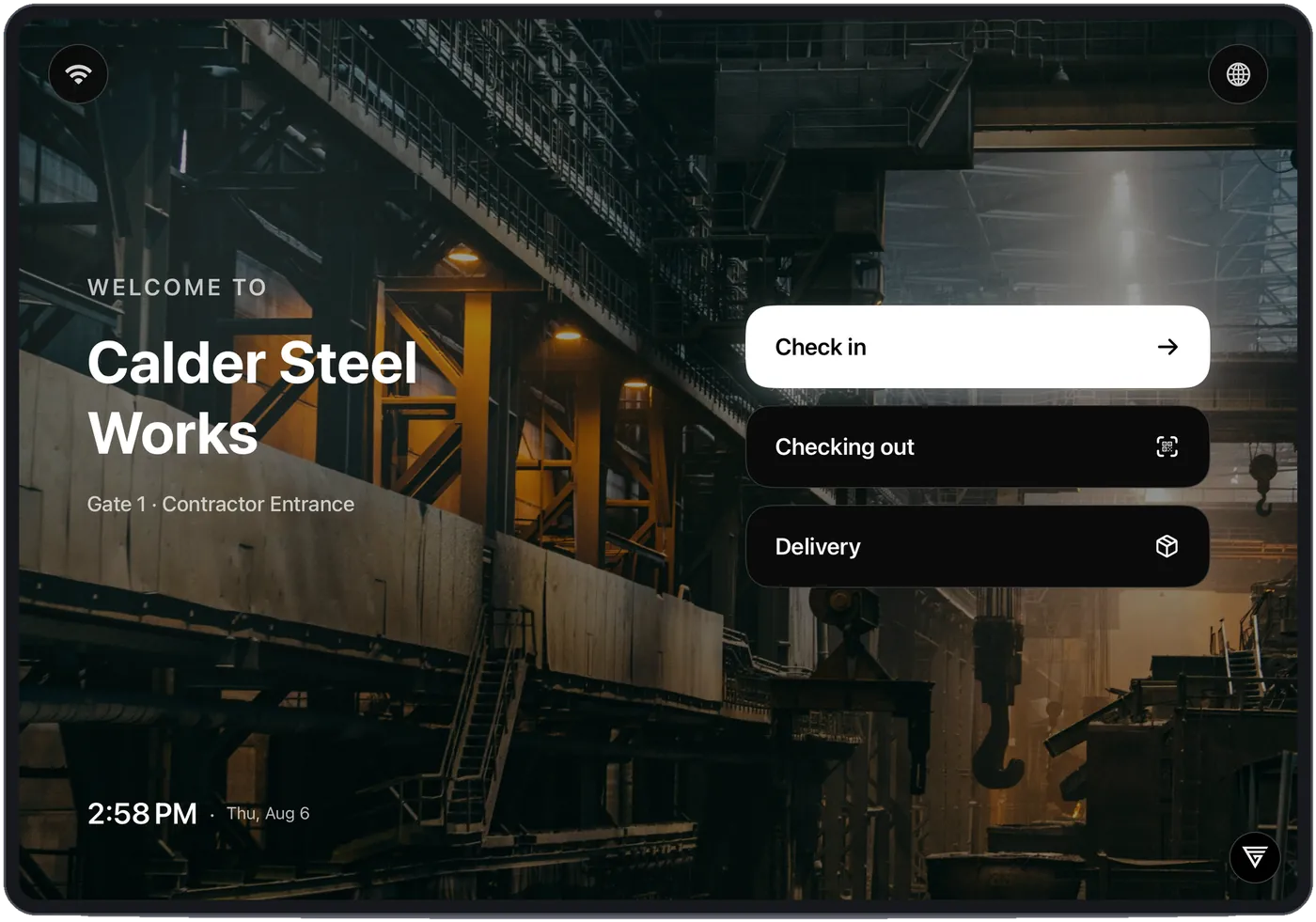 Visitor kiosk at a steel works contractor gate
Contractor gates deserve special attention: they see the highest-risk visitors, the most repeat traffic, and the most scrutiny after an incident. A contractor check-in that enforces induction and waiver per visit — not "he signed something last year" — is the difference between a record and a liability.
Deliveries are not visits
A courier doesn't need a host, an induction, or a badge — they need a fast lane. Forcing deliveries through the visitor flow teaches drivers to skip check-in entirely. Give them their own flow at the same screen and the delivery log becomes real instead of aspirational.
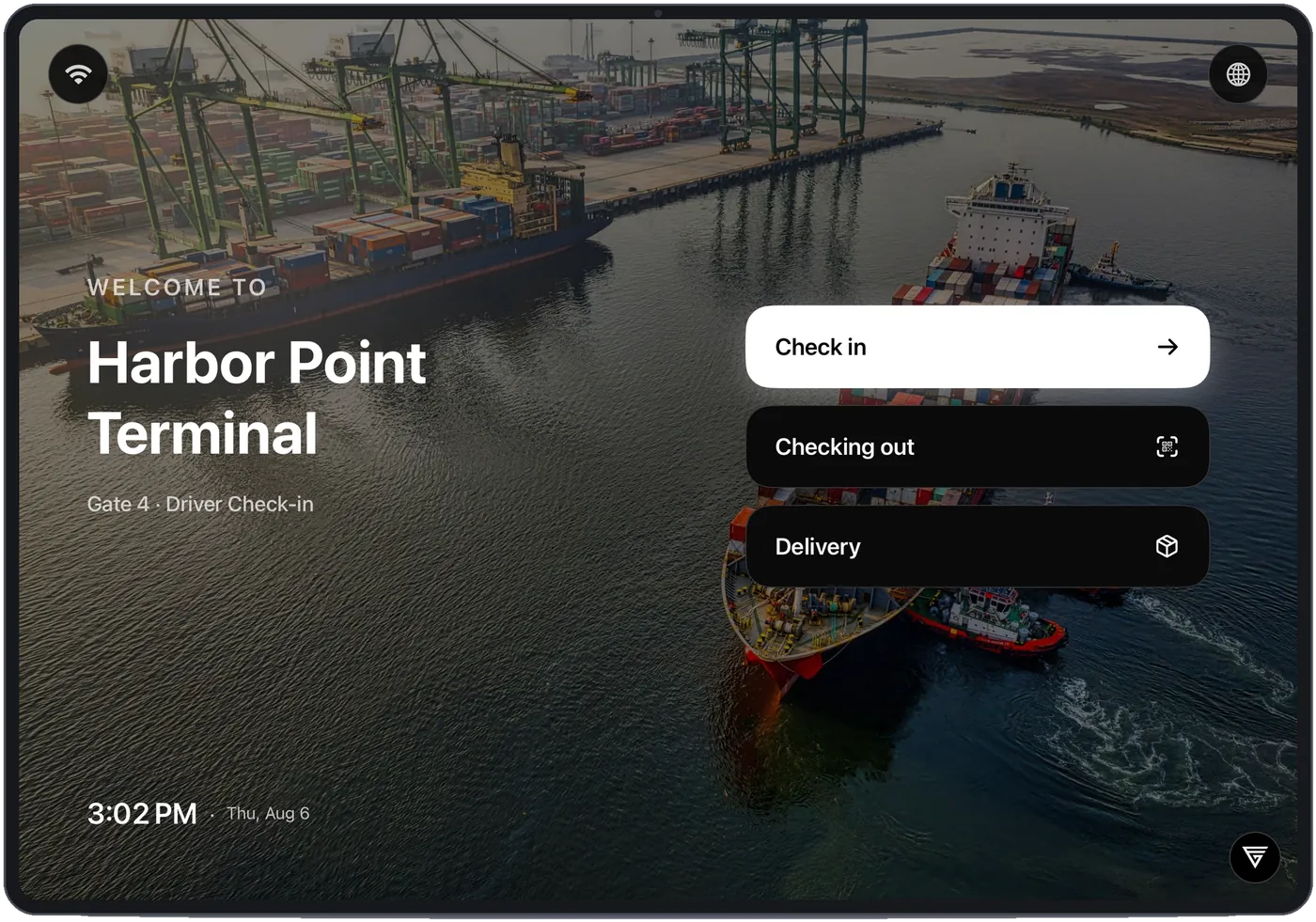 Visitor kiosk at a port terminal driver check-in gate
Sign-out is the half everyone skips
Check-in without check-out produces a list of everyone who has ever arrived — useless in the one moment the list matters, which is the evacuation muster. Badge scan on the way out closes the record, keeps the live on-site list true, and turns "who is still inside?" from a guess into a query. We covered this failure mode in detail in our piece on the paper log book.
Nothing to install — for anyone
Visitors won't download an app, and they shouldn't have to. An invite arrives by text with the time, host, and a check-in code; a QR pass drops into Apple Wallet or Google Wallet; walk-ins use the kiosk directly. If the process needs an account, the process loses to the paper book it replaced.
The short checklist
- Induction video that blocks check-in until watched
- Waivers and site documents agreed on screen, stored per visit
- Per-gate arrival records, one central log
- A separate delivery flow
- Printed badges, so an unbadged person is visible at a glance
- Badge scan-out and a live on-site list
- Multi-language, because your visitors don't all read English
- A record you can search, filter, and export for an auditor
The GatesFlow Visitor Kiosk ships all of this on one tablet at the entrance — $150 a month, hardware included, pricing broken down here. Send us your logo and one safety document, and we'll show you the exact check-in your visitors would see.