The Paper Visitor Log Book: Four Things It Will Never Do
Walk into almost any plant, warehouse, or office and the visitor system is the same: a spiral-bound sign-in book on the front desk, a clipboard of liability releases nobody files, a stack of badge stickers, and somebody typing it all into a spreadsheet at the end of the week.
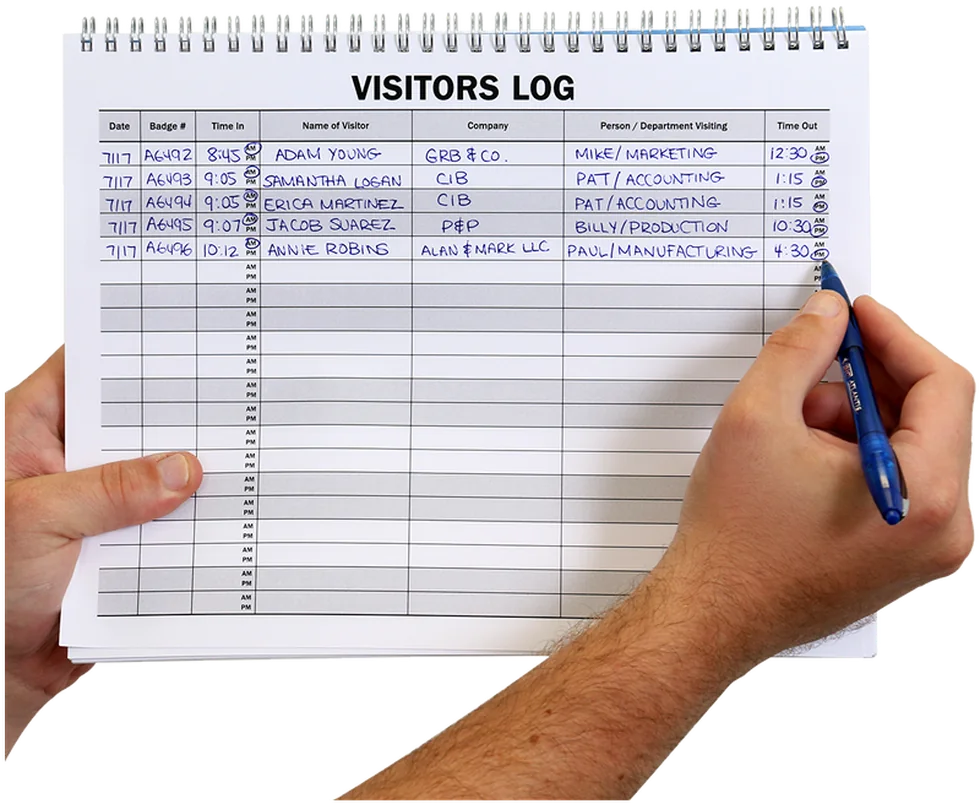 A paper visitors log book being filled in by hand with date, badge number, time in, visitor name, company and time out
It feels like a system because it produces paper. But ask it to do any of the four jobs a visitor record actually exists for, and it fails every one.
1. Tell you who is still inside when the alarm goes off
The muster point is where the paper system meets reality. The log book is at the desk — possibly inside the building you just evacuated. Half the sign-outs are blank because nobody signs out. The fire marshal asks "is everyone accounted for?" and the honest answer is a guess.
A digital log closes the record when the badge is scanned on the way out, so the list of people inside is current at any moment — including at 3am, including during the drill.
2. Prove a contractor watched the safety briefing
When something goes wrong, the first question is "was this person inducted?" A signature next to a name proves someone held a pen. It doesn't prove they watched the induction, and it certainly doesn't timestamp it.
A kiosk can refuse to complete check-in until the induction video has played through. The record then shows this person, this video, this timestamp — which is the difference between a policy and a defense.
3. Show that a visitor signed your liability release
The clipboard release ends up in a drawer, filed by nobody, retrievable by no one. Two years later, when it matters, it might as well not exist. And because a paper book is open on the desk, every visitor also reads the names, companies, and arrival times of everyone who came before them — which, under GDPR and similar privacy laws, is a disclosure problem hiding in plain sight.
Digital consent is stored against the visit: the exact document version, who agreed, and when. Searchable in seconds, visible to no other visitor.
4. Stop an unbadged stranger walking onto the floor
Paper is passive. It records (some of) the people who chose to stop at the desk. It does nothing about the person who didn't. Printed badges change the floor culture: anyone walking around without one is instantly visible, and the polite question "can I help you?" has a system behind it.
What "digital" actually needs to mean
Swapping paper for a tablet only helps if the record underneath is real. The checklist we'd hold any system to — including ours:
- Searchable and exportable — filter by date, name, company, or gate; hand an auditor a file instead of a box.
- Sign-out that closes the record — otherwise your "live" list is fiction with a nicer font.
- Consent stored per visit — the document version signed, not a filing cabinet promise.
- Induction enforced, not offered — no video, no badge.
- Per-gate records — a contractor entrance and a front lobby are different doors with different rules.
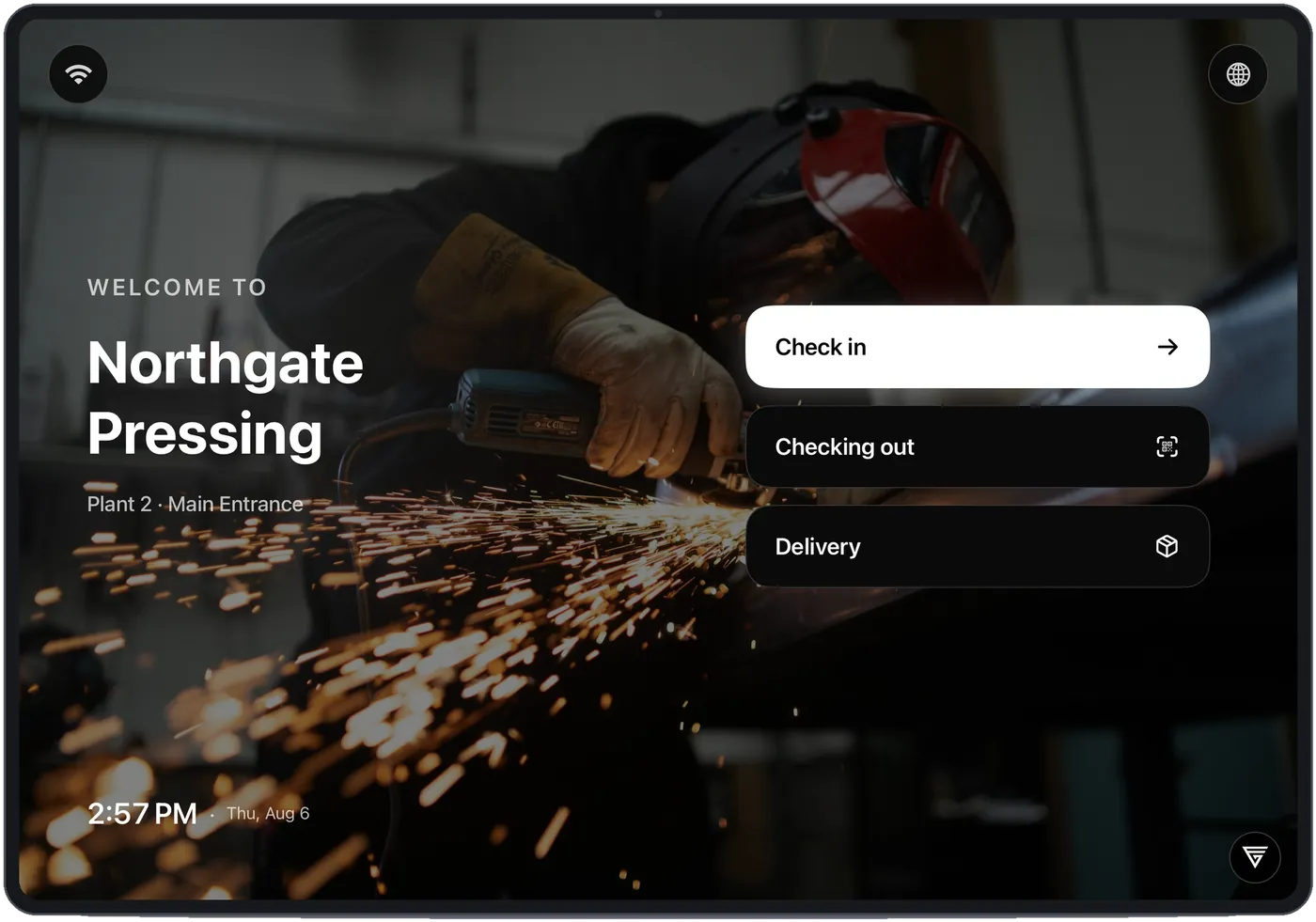 GatesFlow visitor kiosk on a tablet at a pressing plant entrance, showing Check in, Checking out and Delivery options
Where to start
The GatesFlow Visitor Kiosk does everything above by default — one tablet at the entrance, $150 a month with the tablet and badge printer included, nothing for visitors to install. If you're comparing options first, we've written an honest breakdown of what visitor management systems cost and what belongs at a factory gate check-in.
The spiral-bound book had a good run. Retire it before an audit — or an alarm — does it for you.